
Thank you for signing up to be one of our valued judges. We hope you enjoy the experience and the day!
The Race
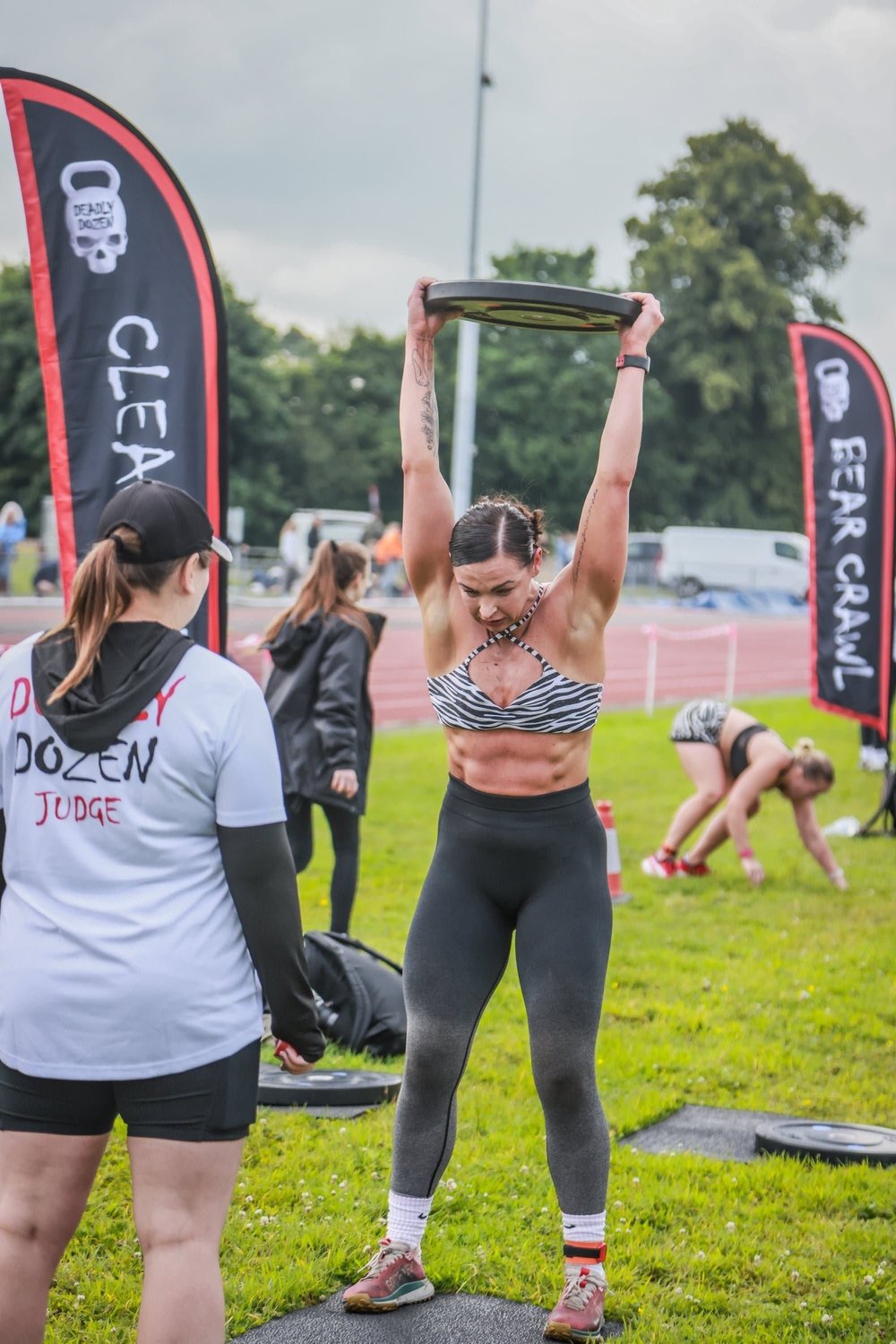
The race involves 12 x 400m runs, which we refer to as “Journeys,” and 12 x exercise stations, which we refer to as “Labours.” The Labours only use bodyweight (BW), kettlebell (KB), dumbbell (DB) and weight plate (WP) exercises. Therefore, race training is incredibly accessible in any setting, whether in a gym, at home or outdoors. Ultimately, an individual could effectively train for the event with just a pair of KBs
Official Deadly Dozen races are held on athletics tracks (both outdoor and indoor) and involve running a 400m lap (1 x 200m lap indoors) before crossing over into the centre and completing a Labour and repeating the process until the athlete has completed all 12 Labours - 6 of the Labours move between a 30m lane (Distance Labours - D Labours) and 6 are stationary (Rep Labours - R Labours).
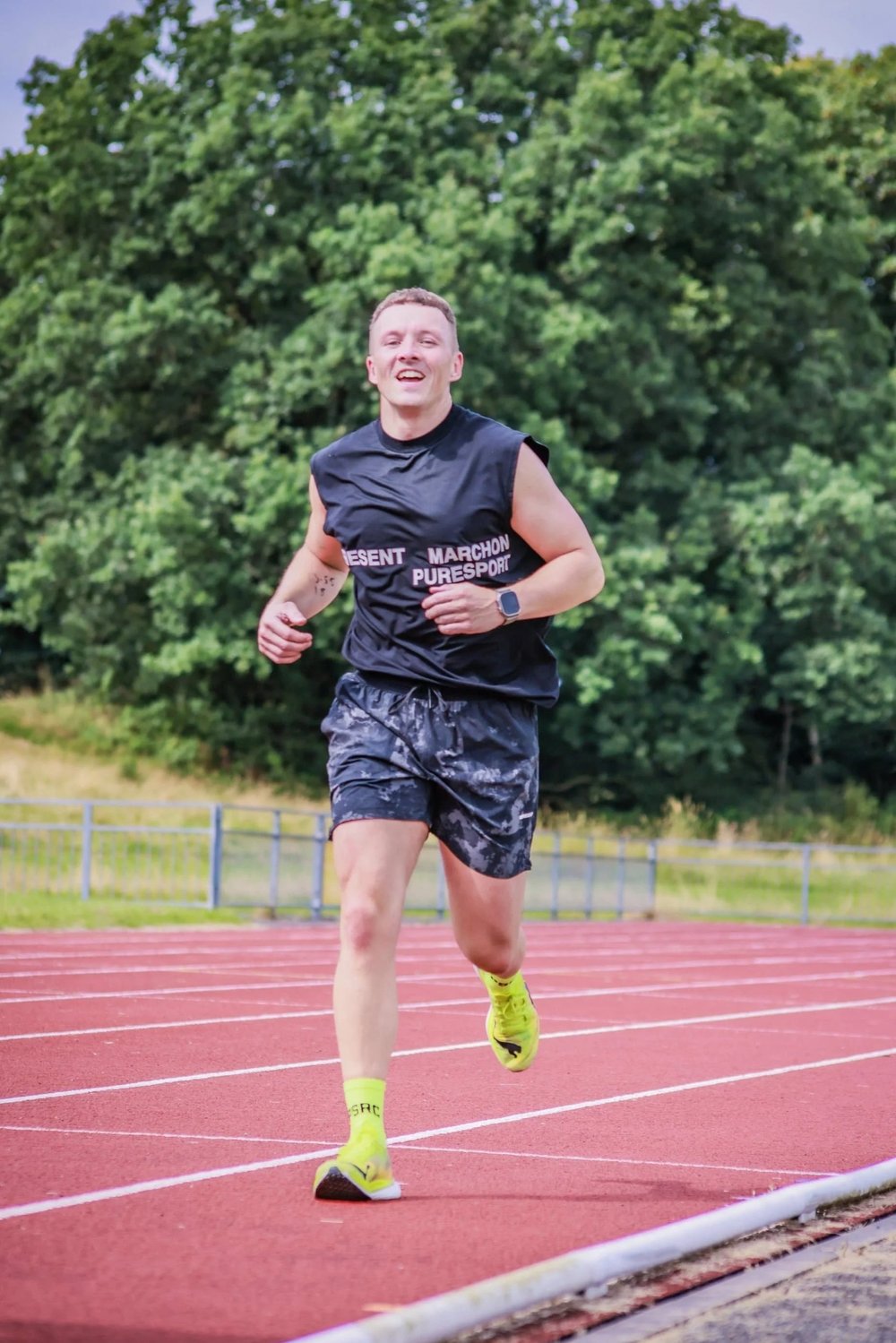
On the day
Station Allocation & Flexibility
Stations will be assigned on the morning of the event, but expect to rotate as needed. We've introduced flexible judges - athletes who will help before or after their race - who will be wearing judge t-shirts.
Arrival Time
Full-day judges, please arrive between 8:00 and 8:15 AM to check in and attend the pre-event briefing. You'll have time for a coffee and chat before the first wave begins. Registration is at the Volunteer Gazebo, located behind Labour 6 (Goblet Squat).
Lunch Break
During staggered lunches, 1-2 people per station should collect pizzas. Breaks will take place near the volunteer hub. Once finished, early lunchers can rotate in to relieve those who are still working.
What to Bring
Camping chairs are welcome, but keep labour lane entrances clear - store bags around the Volunteer Gazebo. While theft is unlikely, please keep valuables with you or locked in your car.
Track Access
Spectators and coaches are not permitted in the labour lanes or on the track. Report any issues to a Race Coordinator (in red).
Pack Down Help
If you can stay to help with cleanup after all the athletes finish, it’s genuinely appreciated!
The Labours
The twelve Labours in race order. Every Labour is preceded by a 400m Journey lap of the track; six Labours move along a 30m lane and six are stationary. The key points are what you are judging.
Farmers Carry (KB)
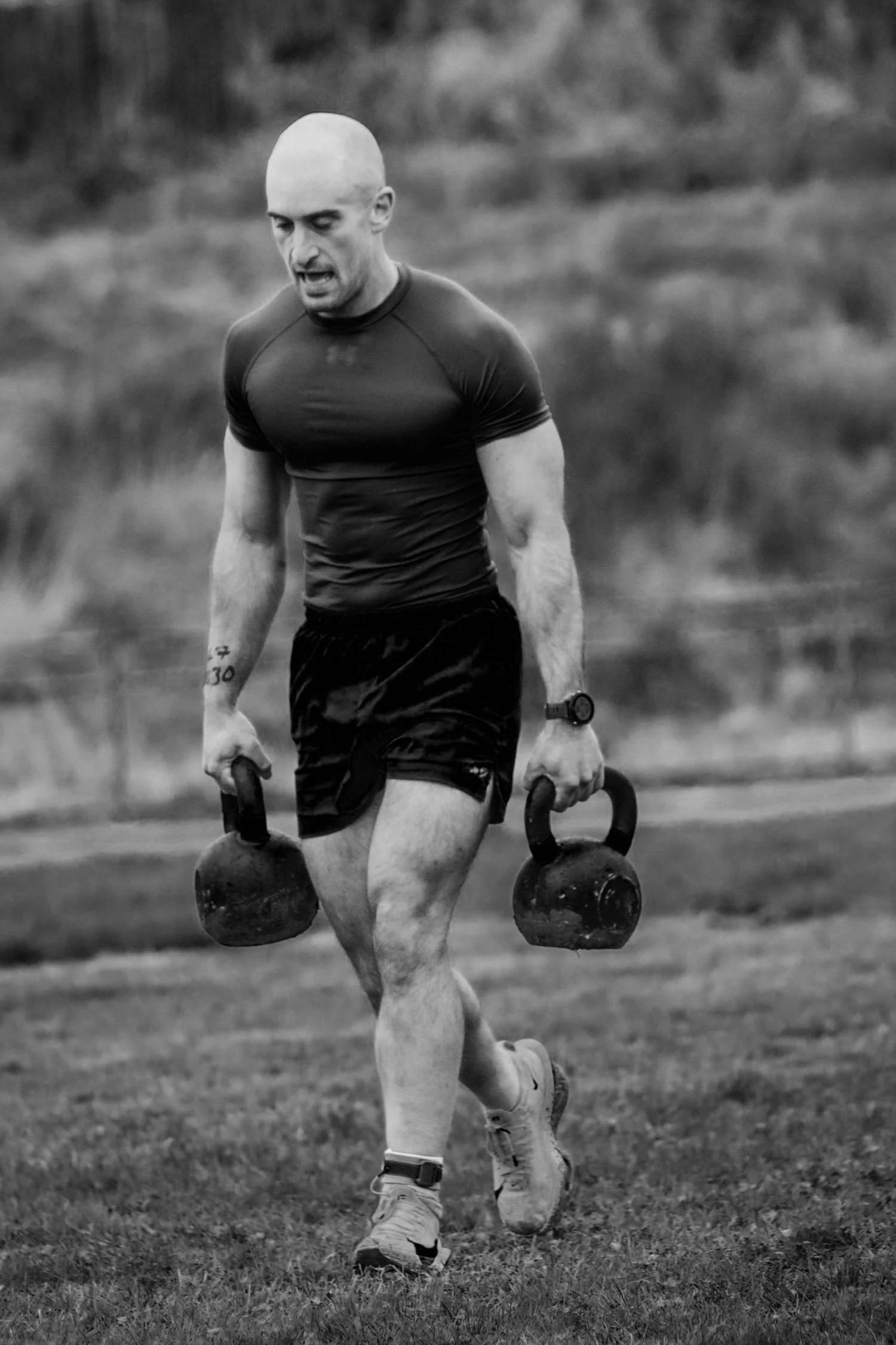
240m (8 x 30m lengths - 4 x there and back)
Key points:
- The athlete must cross the line with the entire body at each end (both feet).
- Can run, walk or shuffle.
- Any style of grip can be used.
Deadlift (KB)
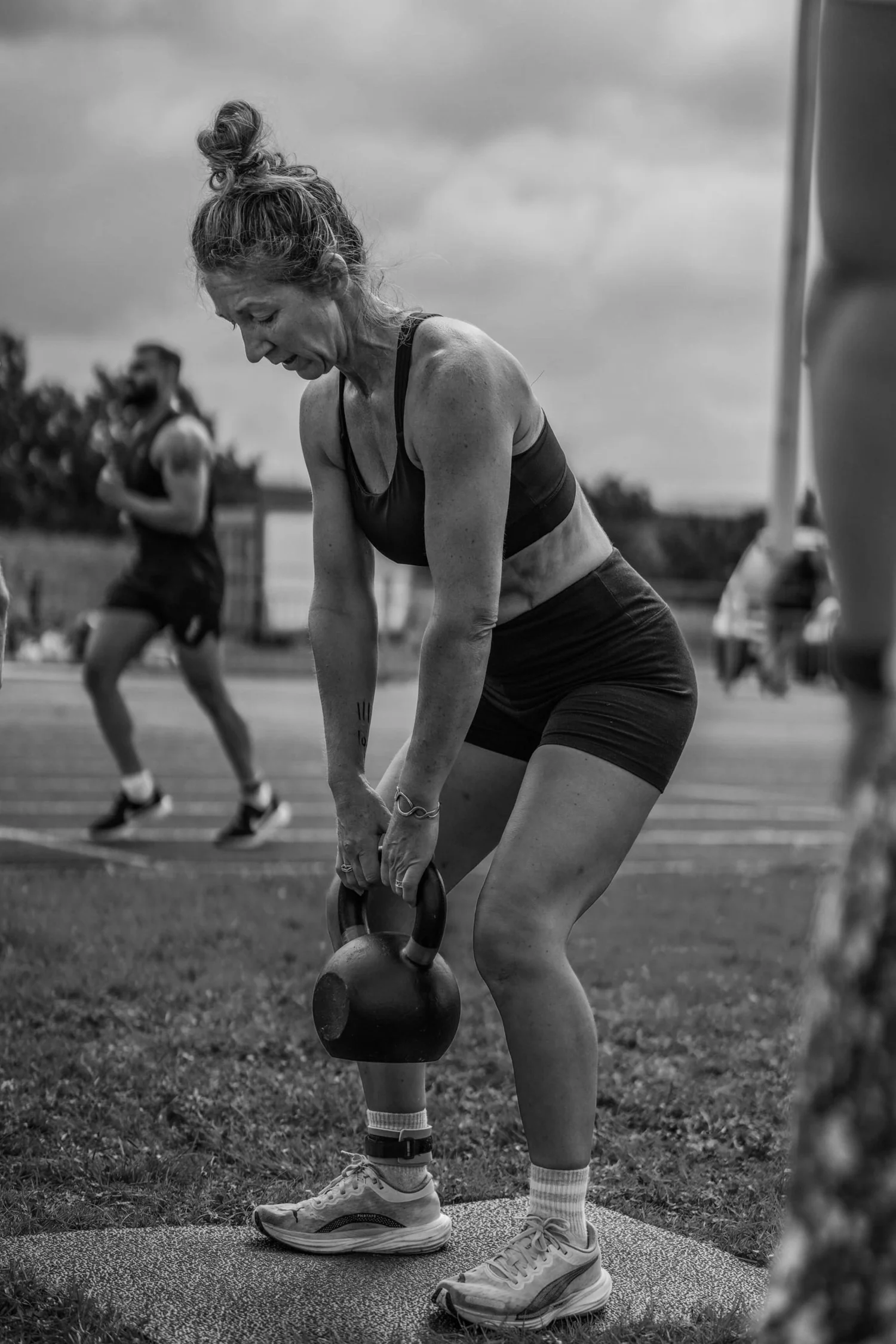
60 reps
Key points:
- KB to touch the floor between each rep.
- Knees and hips are fully extended at the top, and shoulders are back.
- Hands do not leave the handle unless taking a break, remaining stationary during the break.
Lunge (DB)
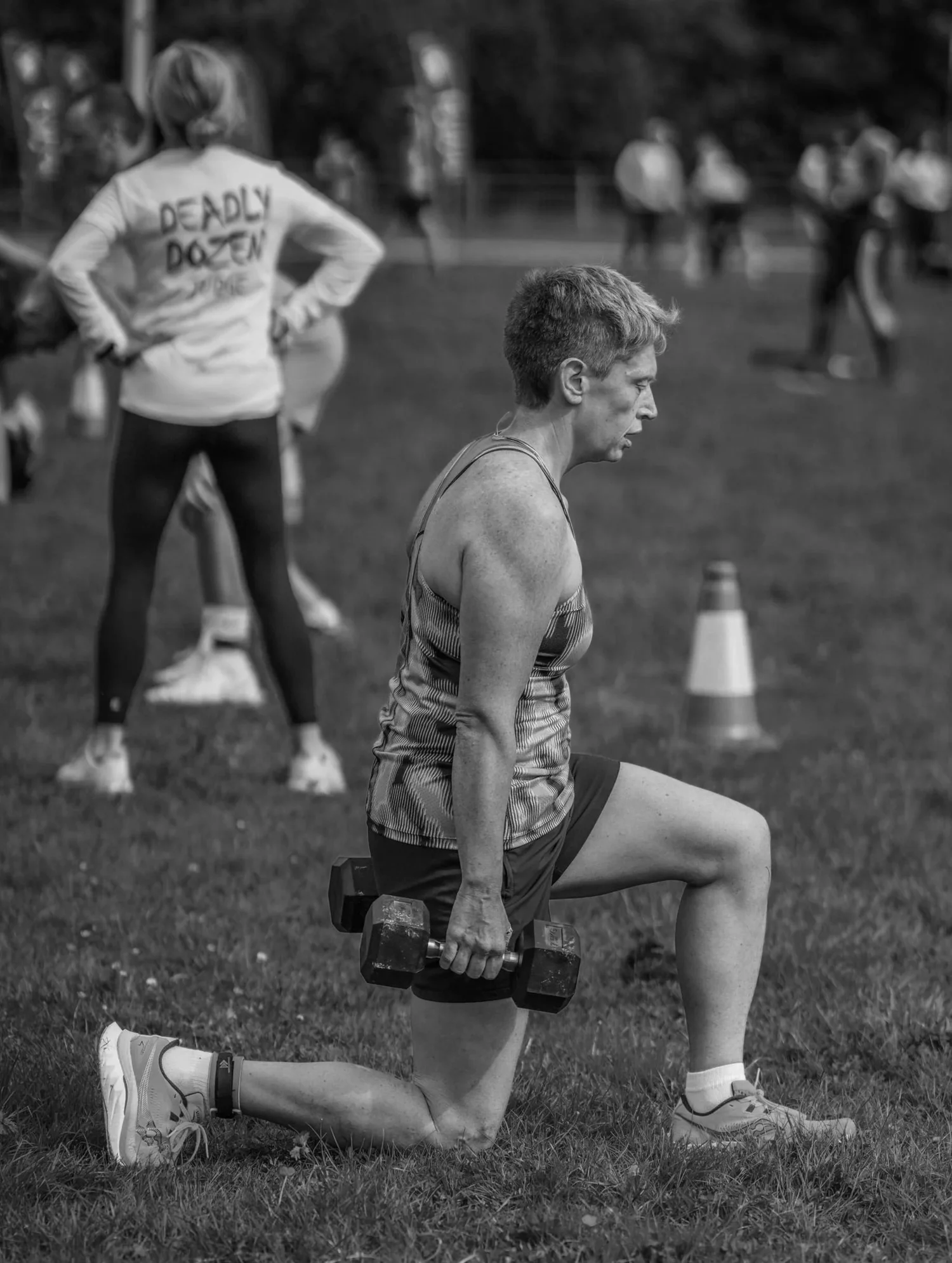
60m (2 x 30m lengths - 1 x there and back)
Key points:
- The rear knee touches the floor during each lunge.
- Alternate legs; knees and hips fully extend at the top.
- No steps forward between lunges.
Snatch (DB)
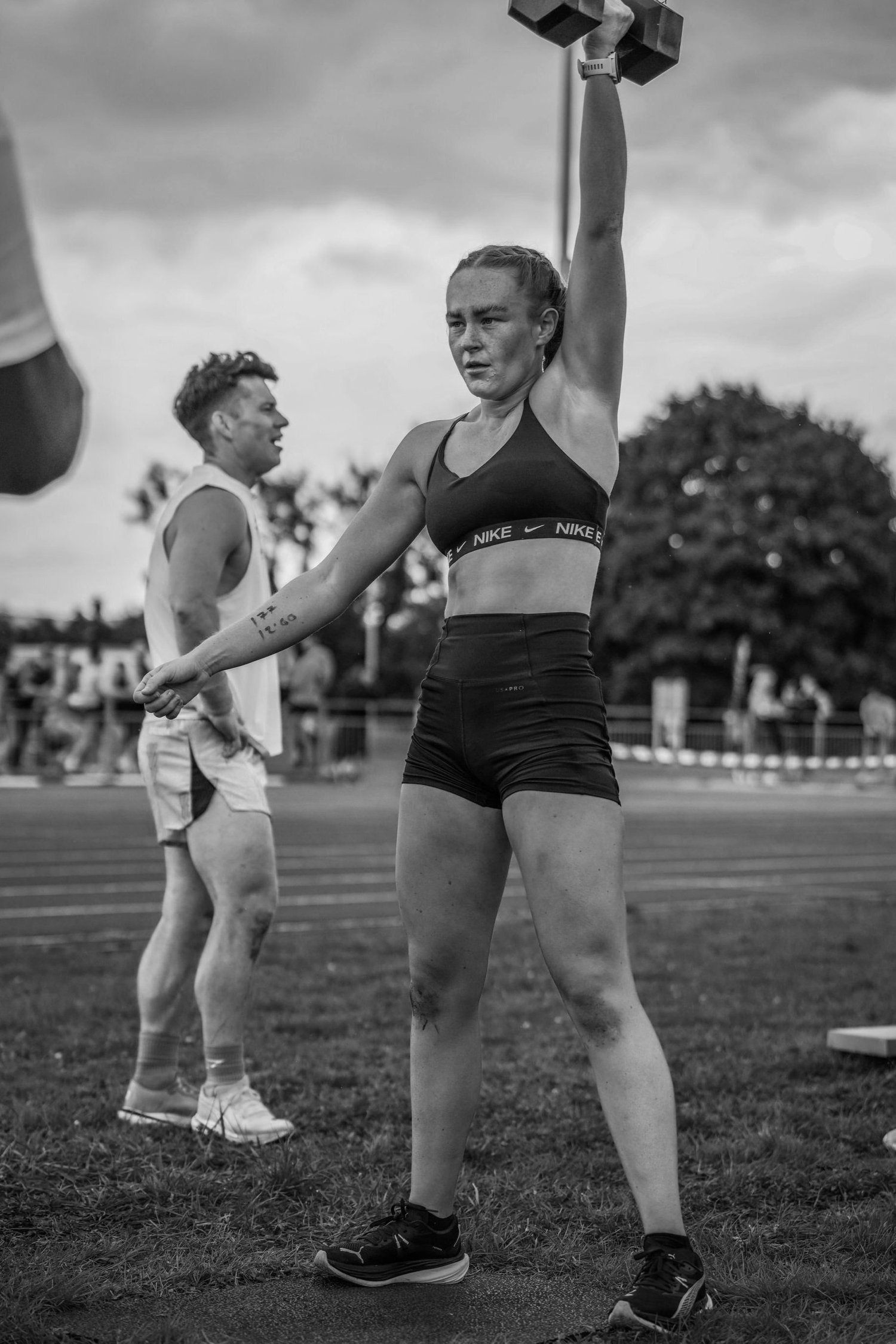
60 reps
Key points:
- DB pulled upward and overhead with the elbow fully extended.
- Reps alternate each side; the DB is passed after arm extension or whilst on the floor.
- DB to touch the floor.
Burpee Broad Jump
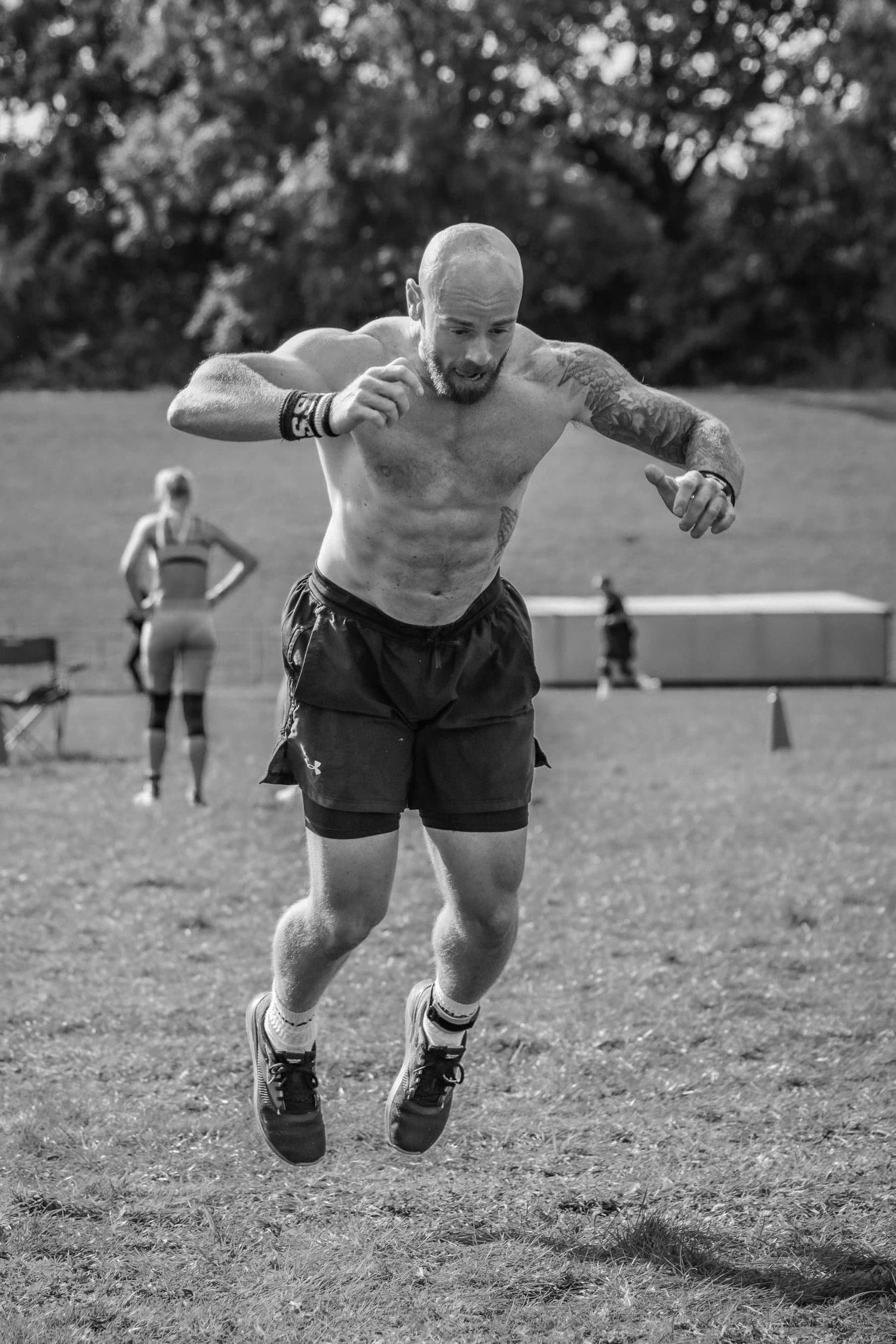
60m (2 x 30m lengths - 1 x there and back)
Key points:
- Hands can be placed anywhere in front of the feet when performing the burpee, but the athlete cannot dive or leap forward.
- No additional steps upon landing the jump.
- An athlete can jump or step up from the bottom position.
Goblet Squat (KB)
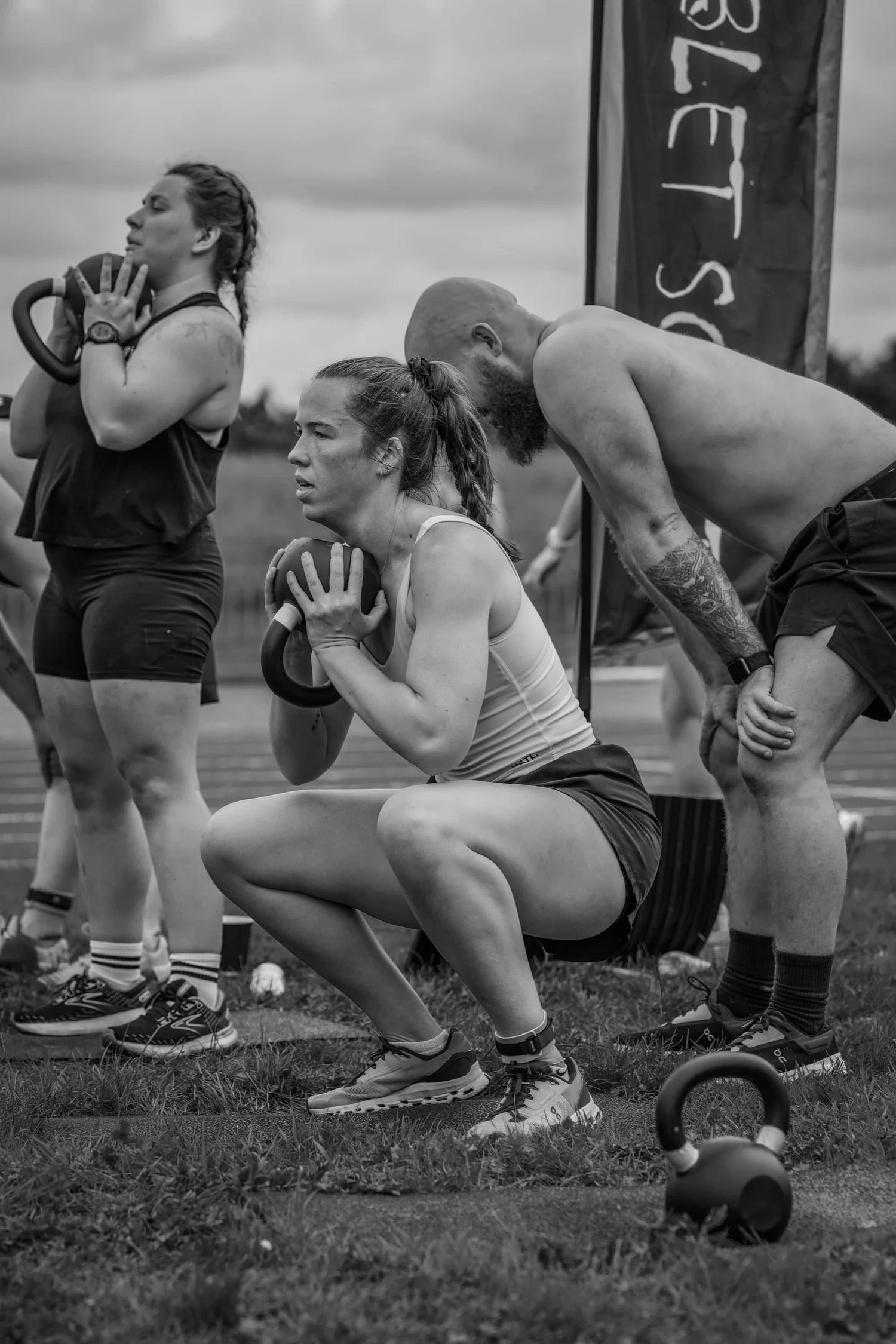
60 reps
Key points:
- Squat to parallel.
- KB held above the waist.
- Both knees and hips fully extend at the top.
Front Carry (WP)
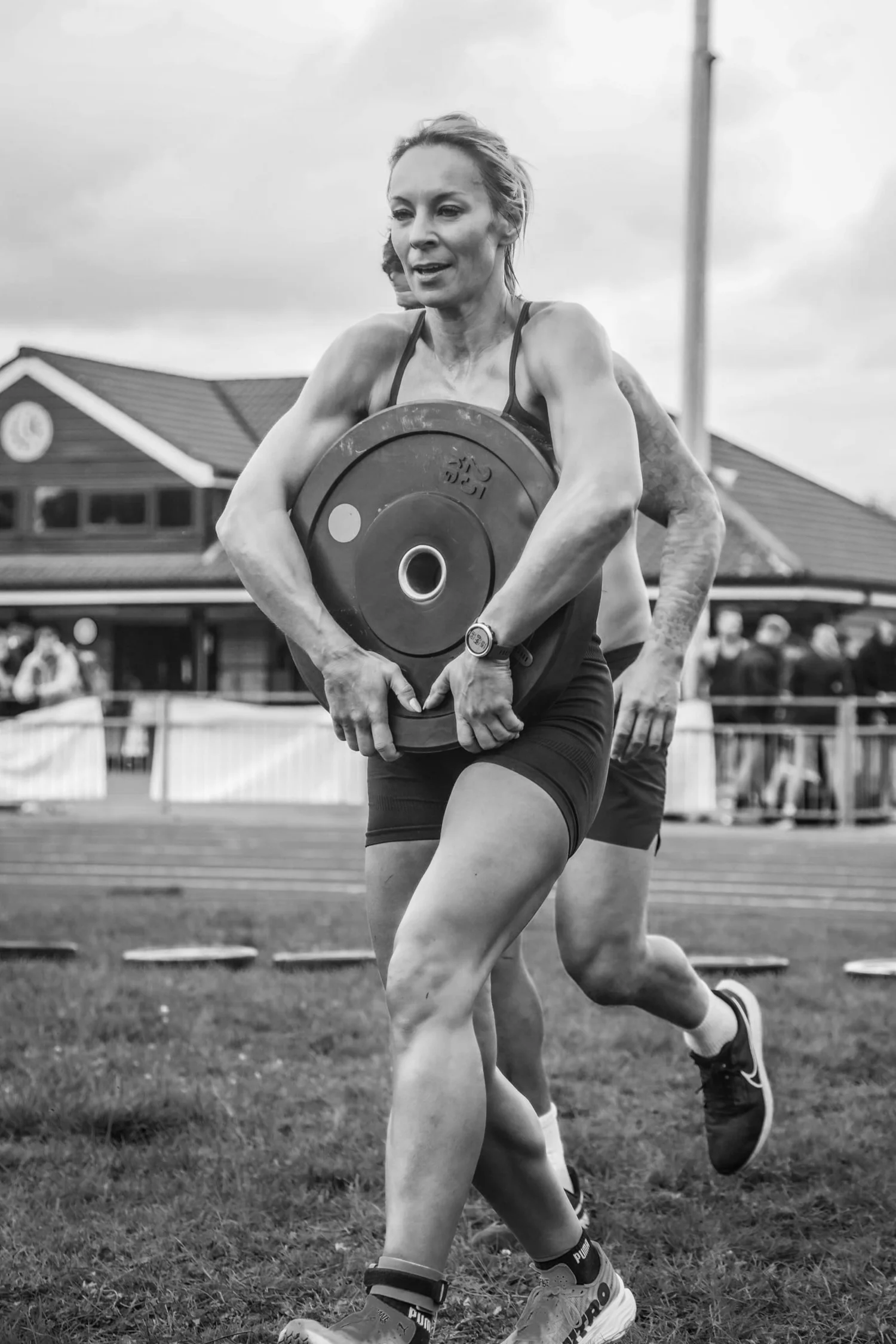
240m (8 x 30m lengths - 4 x there and back)
Key points:
- Full body to cross the line at the end of each lane (both feet).
- Both hands and arms hold the plate at the front of the body.
- Can run, walk or shuffle.
Push Press (DB)
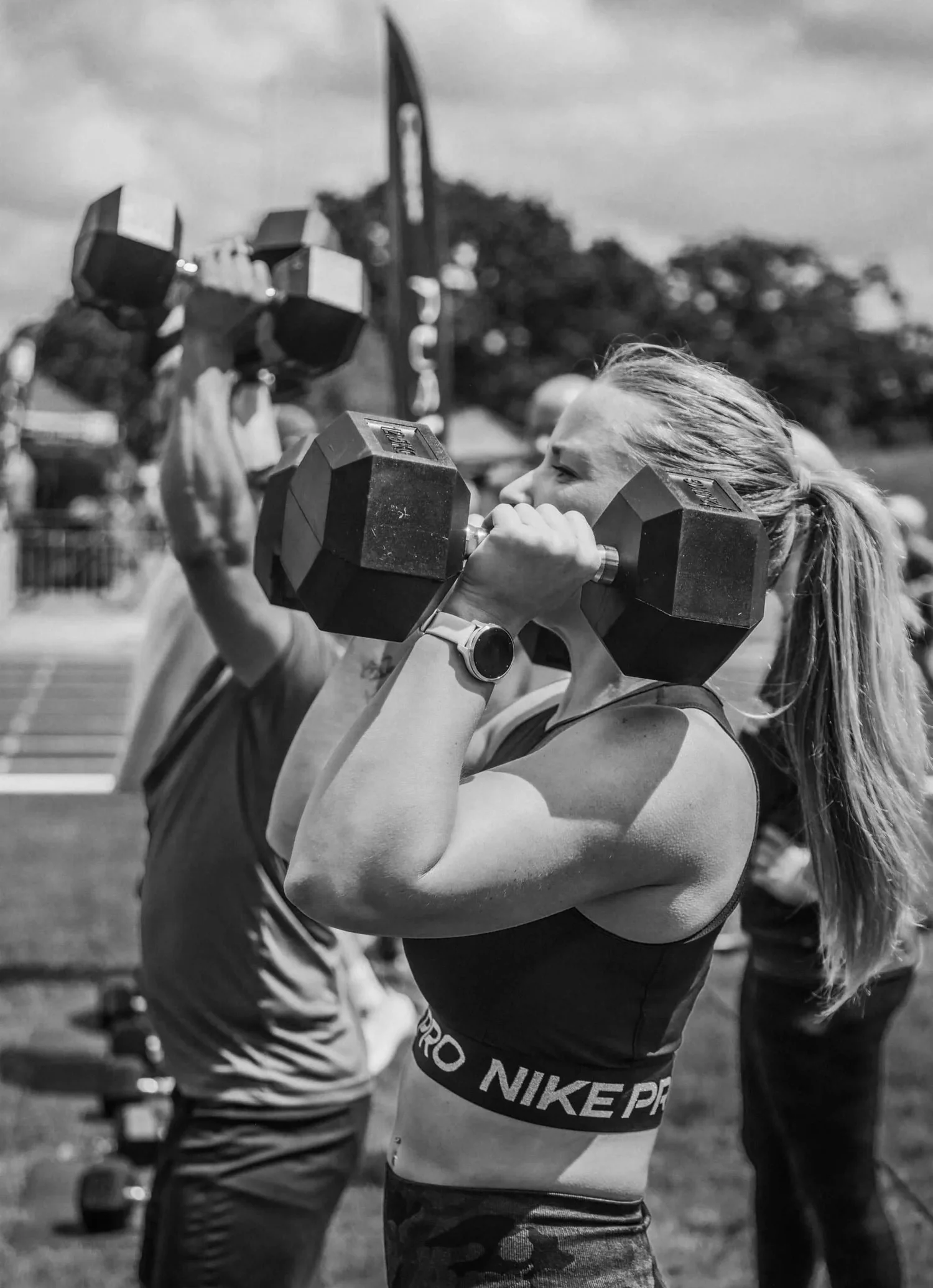
60 reps
Key points:
- At the bottom of the movement the DBs are either touching the shoulders or just above, no higher than the ears.
- Elbows fully extend at the top of the movement.
- Any style of grip can be used.
Bear Crawl (BW)
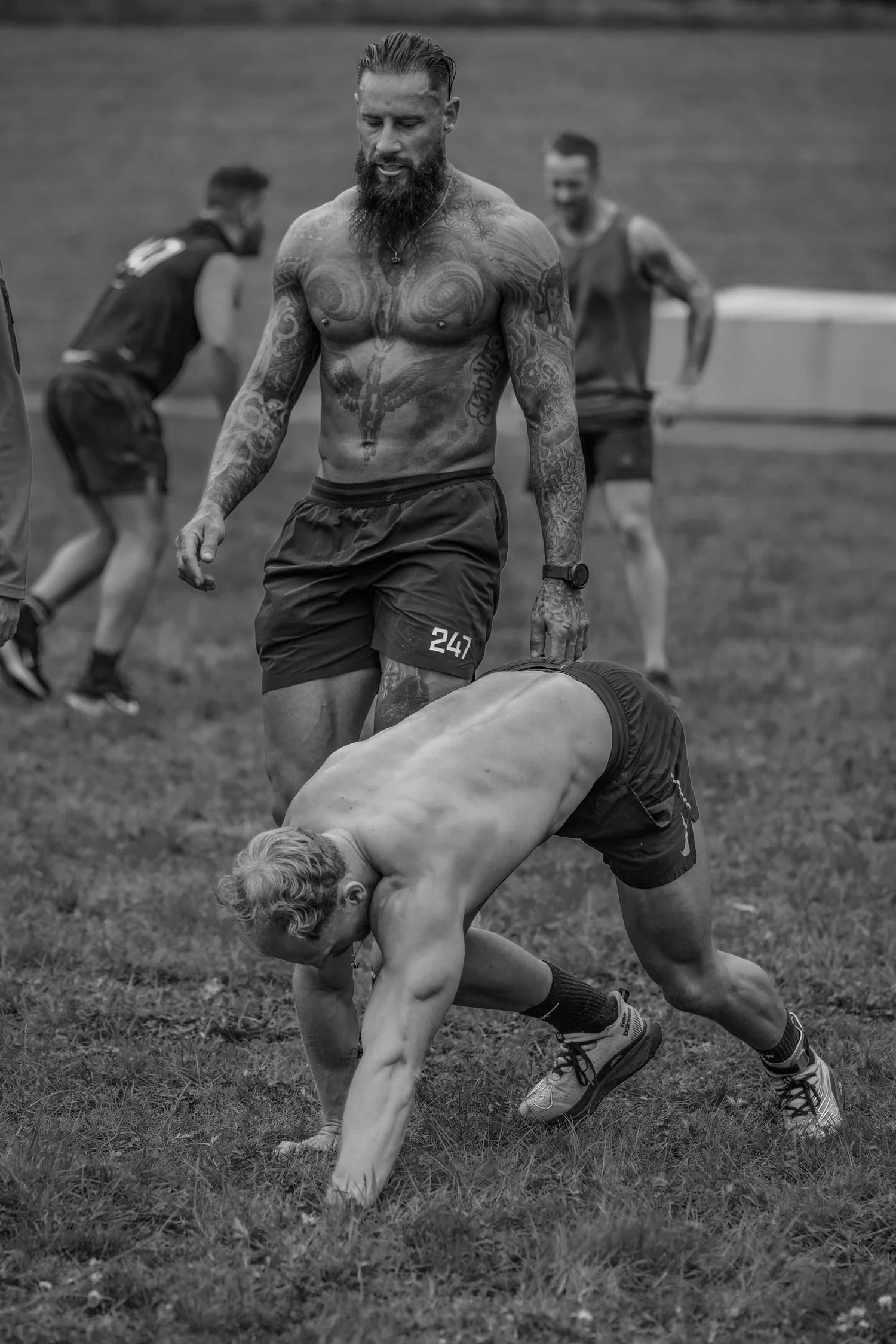
120m (4 x 30m lengths - 2 x there and back)
Key points:
- Knees cannot touch the floor whilst crawling.
- No galloping.
- Entire body to cross the line at each end of the lane.
Clean & Press (WP)
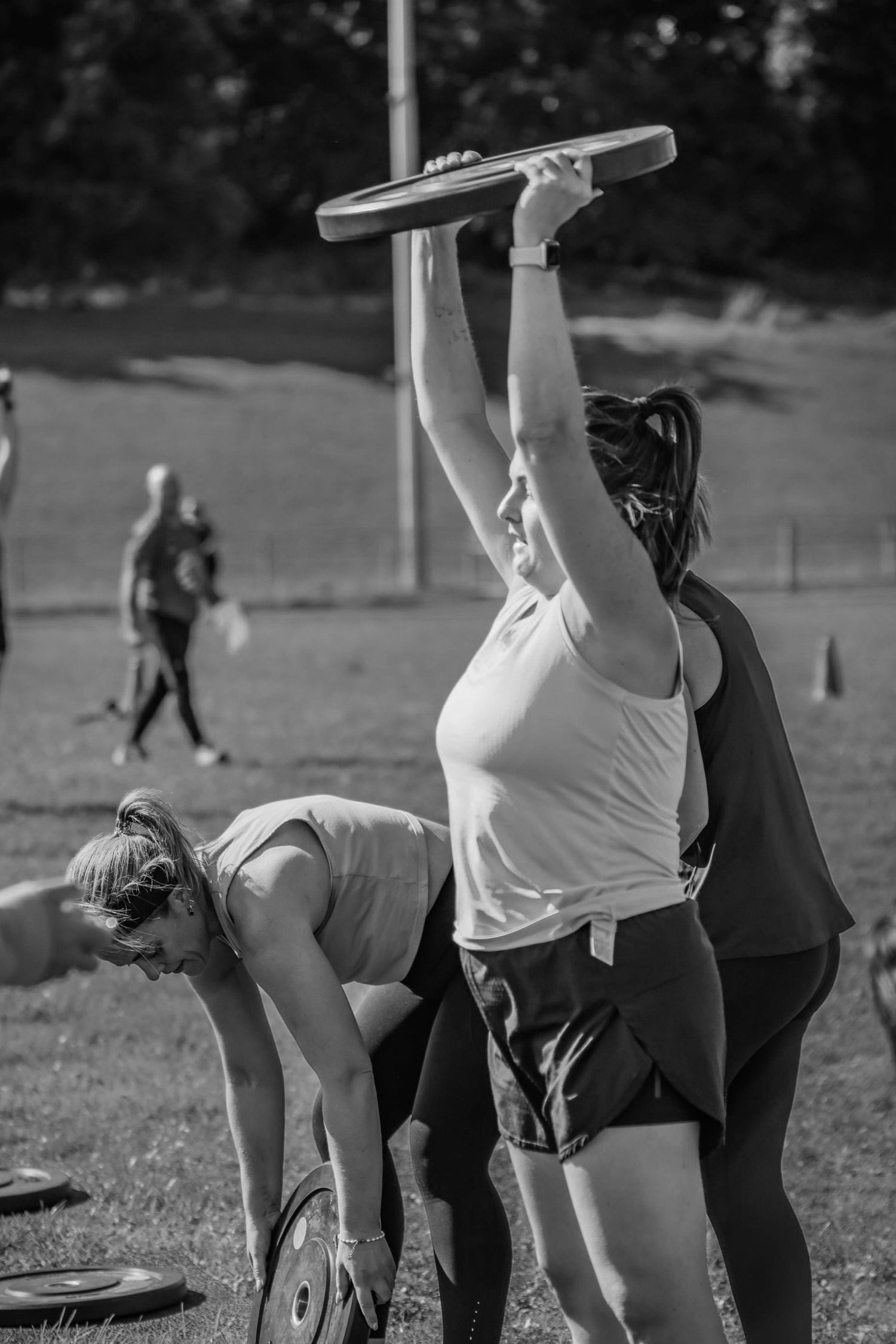
60 reps
Key points:
- Any part of the WP can touch the floor at the bottom of the movement.
- The entire WP is taken overhead at the top with elbows fully extended.
- Any style of grip can be used.
400m Run
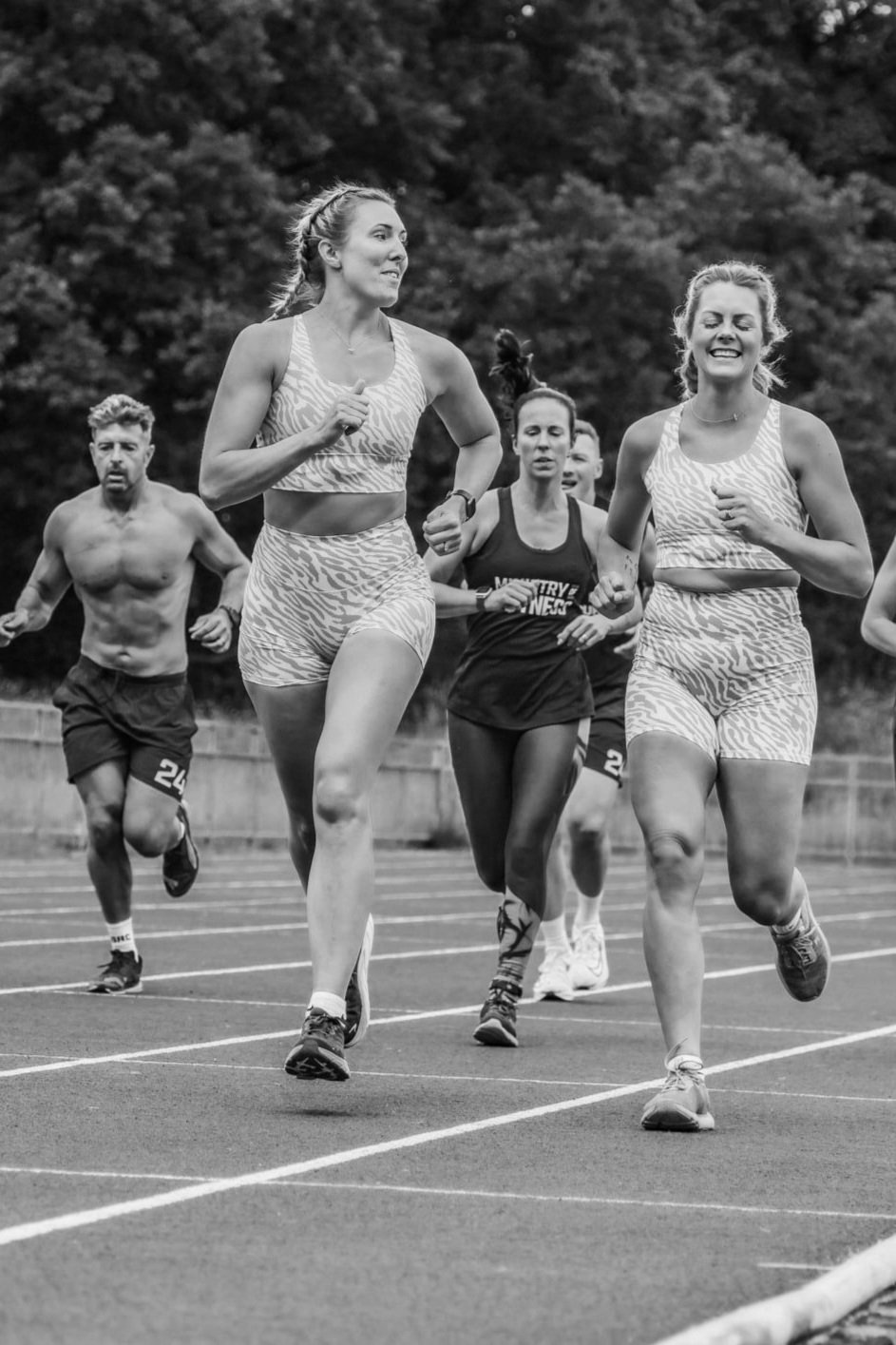
1 lap of the track between every Labour
Overhead Carry (WP)
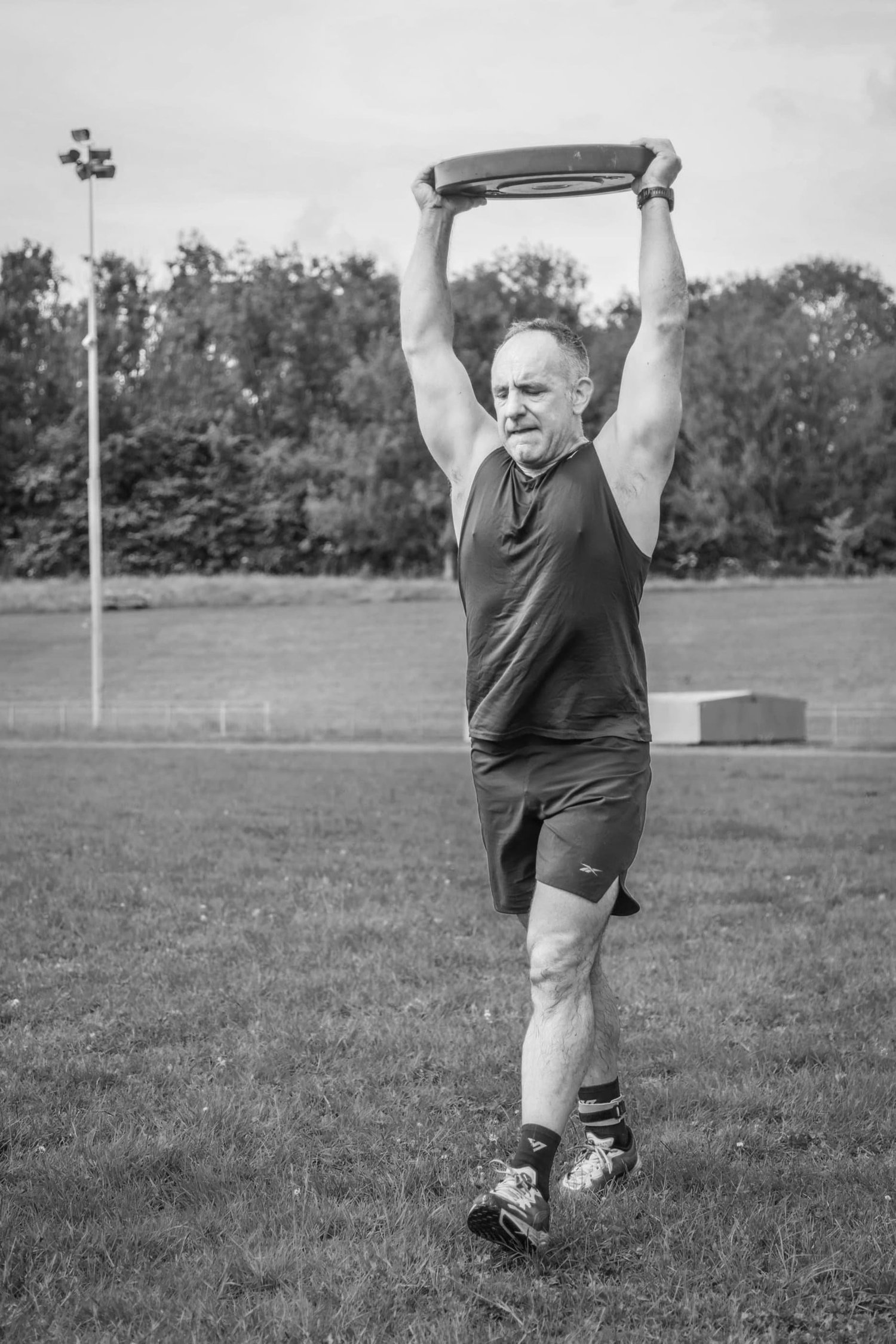
180m
Key points:
- Elbows can be straight or bent whilst holding overhead, but cannot touch the head.
- Can walk or run.
- Any style of grip can be used, but the centre of the plate must be directly over the head.
END: Devil Press (DB)
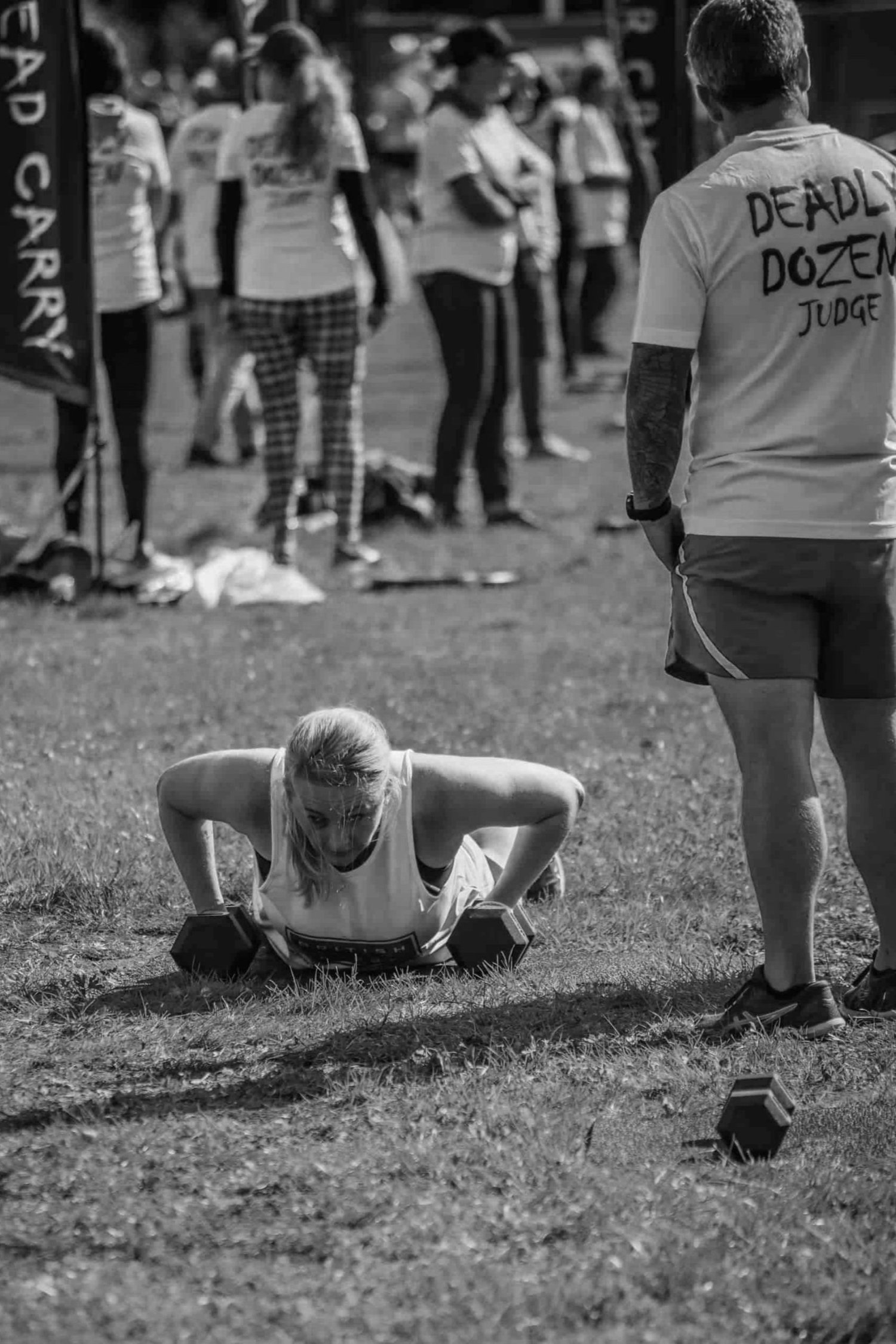
20 reps
Key points:
- Chest and thighs touch the floor at the bottom of the movement.
- Can jump or step up.
- Elbows are fully extended at the top of the movement.
Key Points of the Labours
For all athletes in all categories during the labour, if the athlete takes a rest, they must remain stationary (if holding a weight, it can be placed on the ground). Weights must be placed down on the ground upon completion of the labour.
For the pairs, athletes must remain together. The labour station cannot be started until both athletes are together. Weights cannot be passed between each other; they must be placed on the ground for the other to pick up. For the mixed pairs, both athletes use the male weights.
For the relays, team members must stay back on the track and only cross the timing mat when it is their turn to complete the labour. For all relay teams, the women use the female weights, and the men use the male weights.
If an athlete has a no rep, please ensure you are loud and clear - using hand gestures is helpful.
It’s helpful for the athlete if you count the reps loudly, however, stating the number of reps loudly in 5s or 10s is okay.
It’s okay to continually remind the athlete of their form, i.e. stating “squat low” on a squat, or “extend arms” on an overhead press, or “fully extend” on the upward movement of a deadlift or squat, or “chest & thighs to ground” on the burpee/devil press.
You can give the athlete up to 3 warnings e.g. on a deadlift “extend hips” (stand up straight at top of movement) before calling no reps.
“Wherever there is a human being, there is an opportunity for a kindness.”
- Seneca